Oliver Towfigh Nia
01 October 2026•Update: 01 October 2026
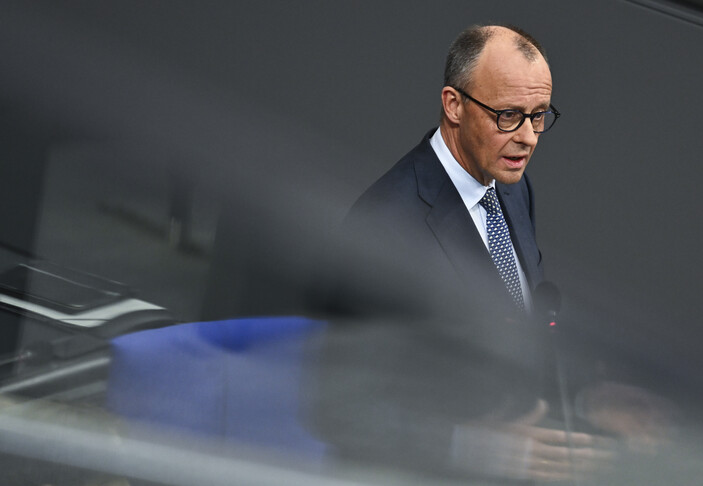
German Chancellor Friedrich Merz told business leaders Wednesday that his government would gradually press ahead with fundamental economic reforms.
“The need for structural reforms is great,” Merz said during a meeting in Berlin with business representatives from the “Made for Germany” initiative.
The federal government has set a number of initiatives in motion, but they are not yet where they actually wanted them to be at this point in time, he added.
Merz said that no one should doubt “my determination” to continue implementing reforms step by step, according to the German Press Agency (dpa).
He cited as an example efforts to increase flexibility in the labor market.
“We have some catching up to do there,” he said, adding this is to be discussed next week in the coalition committee, and a whole series of labor market laws still need to follow.
The chancellor also referred to the deepening of the EU single market and planned pension reform in Germany.
This reform is controversial within the coalition, however. Merz’s junior coalition partner, the Social Democratic Party (SPD), wants to discuss the planned abolition of the full pension after 45 years of contributions. Measures to make the labor market more flexible are also controversial.
Merz pointed out that economic research institutes have raised their economic forecasts for this year. A key driver is the government’s investment of billions in infrastructure modernization through a debt-financed special fund. He said there is not yet a self-sustaining economic upswing for the coming years.
The chancellor made it clear that Germany has great opportunities in the field of artificial intelligence (AI) but at the same time issued an appeal to small and medium-sized enterprises.
“Small and medium-sized enterprises in Germany must make better use of their data,” he said.
If these businesses tap into this treasure trove of data and put it to use, Germany will have one of the greatest competitive advantages in the world, he said, adding that no other country in the world has such a diverse and deeply stratified industrial small-and medium business sector as Germany.