Saadet Gokce
08 October 2026•Update: 08 October 2026
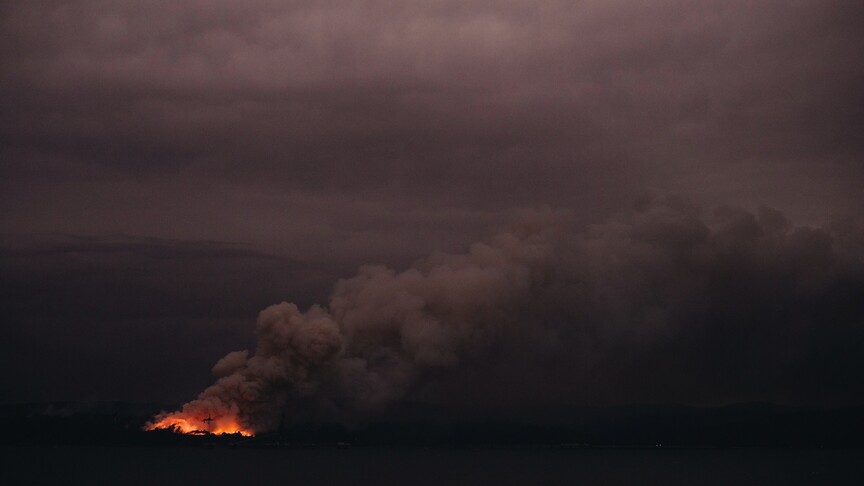
Forest expansion and thickening following British colonization created landscapes more prone to burning, amplifying the influence of climate change and worsening Australia's bushfire crisis, according to a study published in Nature on Wednesday.
The study was conducted by researchers from the University of Melbourne in collaboration with the Gunaikurnai Land and Waters Aboriginal Corporation.
The study involved the reconstruction of 1,000 years of vegetation history in Croajingolong National Park, one of southeastern Australia's most fire-prone forest regions.
The study found that colonization triggered cascading changes, including increased fire temperatures, a fourfold increase in eucalypt cover, the transformation of open woodland into forest, and increased soil erosion.
The paper's lead author Michael-Shawn Fletcher said that the research provides scientific evidence for the value of cultural burning and the need to integrate Indigenous knowledge into contemporary fire management strategies, according to a statement from the University of Melbourne.
"When Country is cared for, climate does not dictate wildfire," he said, adding that the Gunaikurnai people have been caring for the environment for thousands of years, keeping much of the landscape as open woodland.
"Climate records show that seasons of comparably dangerous fire weather, such as those seen during Ash Wednesday and Black Saturday, reoccurred in the region repeatedly before colonization, yet the open landscape maintained by cultural burning protected the land from catastrophic fire," Fletcher said, arguing that colonization ended that practice, leading forests across the region to expand and thicken and eventually increasing the amount of fuel in the landscape.
Australia breaks ground in $1.2 billion rare earths mine project
Separately, in Australia's Northern Territory, a 1.8 billion Australian dollars ($1.2 billion) rare earths mine reached a major milestone Thursday as construction finally began after two decades in development, according to the Australian Broadcasting Corporation.
The project is backed by the US and Australian governments and Australia's richest woman, Gina Rinehart.